 The huge dunes named Hongoryn els are the largest sea of sand stretching for 180 kilometers. The width of the snad strentch is from 3 to 15 kilometers, the highest peaks tower up to 100-300 meters. Hongoryn els is part of the desert zone which makes up 2.7 percent of the country's territory.
At the northern edge of the dunes there is a picturesque oasis, hongoryn gol, which supports drinking water of animal species in the region.
The region as a whole represents an interesting natural formation with its huge sand dunes, imposing mountains and greens of oasis so closely lying from each other that is rarely found in the world.
The huge dunes named Hongoryn els are the largest sea of sand stretching for 180 kilometers. The width of the snad strentch is from 3 to 15 kilometers, the highest peaks tower up to 100-300 meters. Hongoryn els is part of the desert zone which makes up 2.7 percent of the country's territory.
At the northern edge of the dunes there is a picturesque oasis, hongoryn gol, which supports drinking water of animal species in the region.
The region as a whole represents an interesting natural formation with its huge sand dunes, imposing mountains and greens of oasis so closely lying from each other that is rarely found in the world.
Showing posts with label Desert. Show all posts
Showing posts with label Desert. Show all posts
Monday, May 14, 2007
Hongoryn els - Huge sand dune

Tuesday, November 07, 2006
Gurvansaikhan National Park


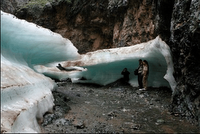
Gobi Gurvansaikhan park encompasses the series of ridges and valleys that make up the eastern end of the Gobi Altai mountains. Surrounded by low plains, the mountains rise to 2200-2600 meters, and include the Gurvan saikhan (three adjacent ridges named Zuun (East), Dund (Middle), and Baruun (West) saikhan), Zoolon, Sevrei, Gilbent, and Nemegt ridges. Some of the peaks are volcanic in origin.
 The park, which extends for more than 380 kilometers from east to west, lies at the northern edge of the Gobi desert but includes desert steppe and steppe at higher elevations. The park's landscape is extremely varied, with rocky and sandy desert plains, precipitous cliffs and ravines, salt pans, and oases. Gurvansaikhan includes the highest diversity of plant life in the Gobi Altai, with over 620 species of flowering plants. Most are characteristic of Central Asian deserts, including 38 endemic species. During years with adequate precipitation, desert plants produce vibrant summer displays of desert flowers.
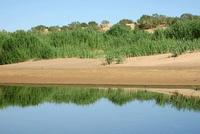 Fifty-two species of mammals are found here, including eight species listed in the Mongolian Red Book as endangered. Small herds of wild ass and black-tailed and Mongolian gazelle roam the desert valleys and desert steppe, while the mountains provide suitable habitat for threatened and endangered animals such as argali, Siberian ibex, and snow leopard. Long-eared hedgehogs and dwarf hamsters inhabit sandy areas. Over 240 bird species occur in the area, including 34 resident species, 99 breeding species, and 70 migrants.
Local herders seasonally graze livestock in parts of the park, which features some popular tourist destinations, including the Valley of Yol, a picturesque gorge, and the Singing Sands, a spectacular sea of sand dunes bordered by red sandstone formations, an oasis, and a saxaul forest. The Nemegt, Khermiin Tsav, Naran daats, and Bayanzag mountains, the sites of numerous important dinosaur fossil discoveries, also lie within the park.
Fifty-two species of mammals are found here, including eight species listed in the Mongolian Red Book as endangered. Small herds of wild ass and black-tailed and Mongolian gazelle roam the desert valleys and desert steppe, while the mountains provide suitable habitat for threatened and endangered animals such as argali, Siberian ibex, and snow leopard. Long-eared hedgehogs and dwarf hamsters inhabit sandy areas. Over 240 bird species occur in the area, including 34 resident species, 99 breeding species, and 70 migrants.
Local herders seasonally graze livestock in parts of the park, which features some popular tourist destinations, including the Valley of Yol, a picturesque gorge, and the Singing Sands, a spectacular sea of sand dunes bordered by red sandstone formations, an oasis, and a saxaul forest. The Nemegt, Khermiin Tsav, Naran daats, and Bayanzag mountains, the sites of numerous important dinosaur fossil discoveries, also lie within the park.
Subscribe to:
Posts (Atom)


 hits
hits